It would be best if any person weren't pressuring you. Consider all choices carefully. We're here to aid you through this process. So, don't hesitate to contact us to schedule a no-cost consultation or request a custom quote.
Is this a good idea or a hoax?
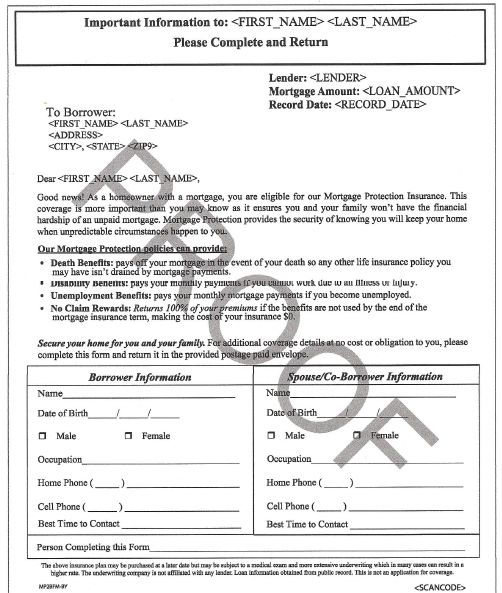
A bunch of insurance companies will be included in the pile telling you that you need to protect your mortgage with a "mortgage protection insurance" policy. There's usually some appeal to a mortgage holder to help their family stay in the home if they were to die suddenly.
Some independent life insurance agencies use this "life event" to offer life insurance. They are not trying to mislead you into thinking they are affiliated with your lender but want you to make them aware of their products or services.
Mortgage Life Insurance is an innovative way to provide life insurance. Some might say it's an over-the-top method, and in many cases, they're correct. However, as stated earlier, many agents utilize this marketing strategy to attract prospective homeowners. They are aware of the requirement for additional life insurance coverage.
If you just recently purchased a home or refinanced your mortgage, you will likely receive many offers in the mail for "Mortgage Life Protection" or "Mortgage Life Insurance." In this article, we will take a look at the pros and cons of Mortgage Protection Insurance. You can answer the question: Is Mortgage Protection Life Insurance a scam or a smart move?

Making sure that your family members are financially supported if you pass away prematurely or are disabled is essential. This is the bigger picture.
Most of the offers you receive in the mail have a postage-paid response card enclosed. Life agents know they will receive a response rate of approximately 2% to 3%. The next step is to call you and schedule an appointment. Be very careful here. Most mortgage life agents are trained to sell you in one visit. It's called the "one-call close." Be prepared for a compelling presentation. However, insist that the agent leaves the quote with you. Take time to compare it to your other options. Tell them this is a big decision and you need time to shop and consider other companies.
It could be surprising; however, knowing who has recently purchased a house can be a public record. The information on who bought or refinanced mortgages for homes and the lender, the loan amount, and the address to which the loan is tied can be found in the local courthouse. The companies will offer life insurance and mortgage protection to prospective homeowners.
If you've recently refinanced or bought your first home, you can expect to receive multiple offers from companies that sell mortgage protection insurance. Some of these offers may be frauds.
Life insurance for mortgages is specifically designed to make your mortgage payment upon loss of income or disabled. The policy typically has an increasing benefit (face) value that is reduced in proportion to the decrease in the value of your mortgage. The insured should name your spouse or a third party as the beneficiary so they can pay off your home in one lump amount. Your beneficiary could also keep the death benefit and continue to make monthly mortgage payments.
Make sure you're not pressured to decide by any agent. Take your time when evaluating all your options. We're here to help you in this process, so please call for a free consultation or customized quote comparison.
If you have recently bought an apartment or refinanced your mortgage, you'll likely get numerous solicitations for "Mortgage Life Insurance" and "Mortgage Life Insurance." In this post, we'll review the advantages and disadvantages of Mortgage Protection Insurance. Is it possible to decide if Mortgage Protection Life Insurance is a fraud or an intelligent choice?
Is mortgage protection insurance required? Mortgage protection insurance isn't needed. It isn't the same as private mortgage insurance, which many banks or lenders will require you to buy.
A mortgage protection life insurance policy is a term life policy explicitly designed to repay mortgage debts and associated costs in the event of the borrower's death. These policies differ from traditional life insurance policies. With a conventional policy, the death benefit is paid out when the borrower dies.
Once you pay off your mortgage, you will no longer have a lender requiring you to have homeowners insurance. While you aren't federally required to have it, keeping your coverage is essential since it protects you financially if your home incurs significant damage or someone is injured on your property.